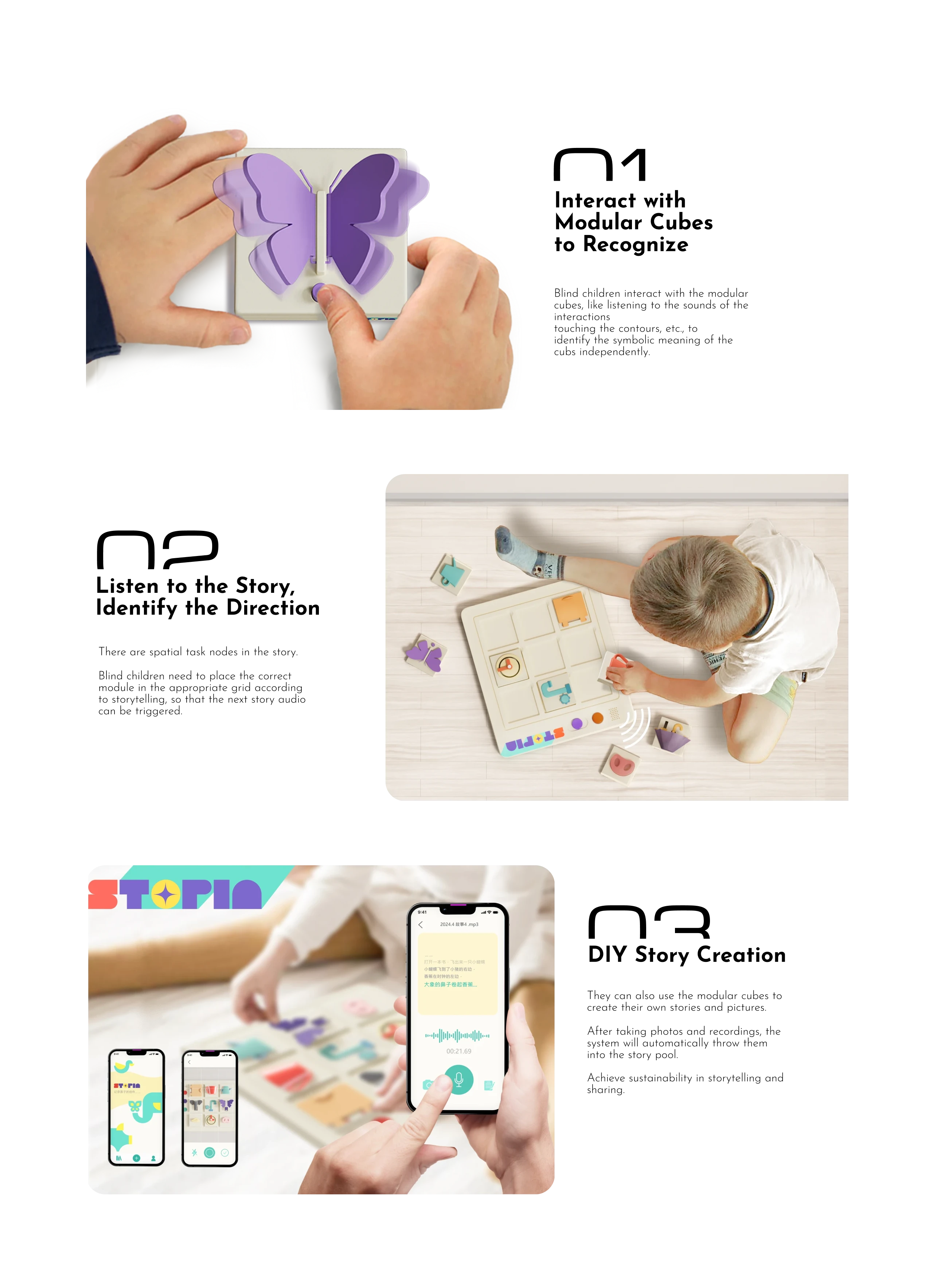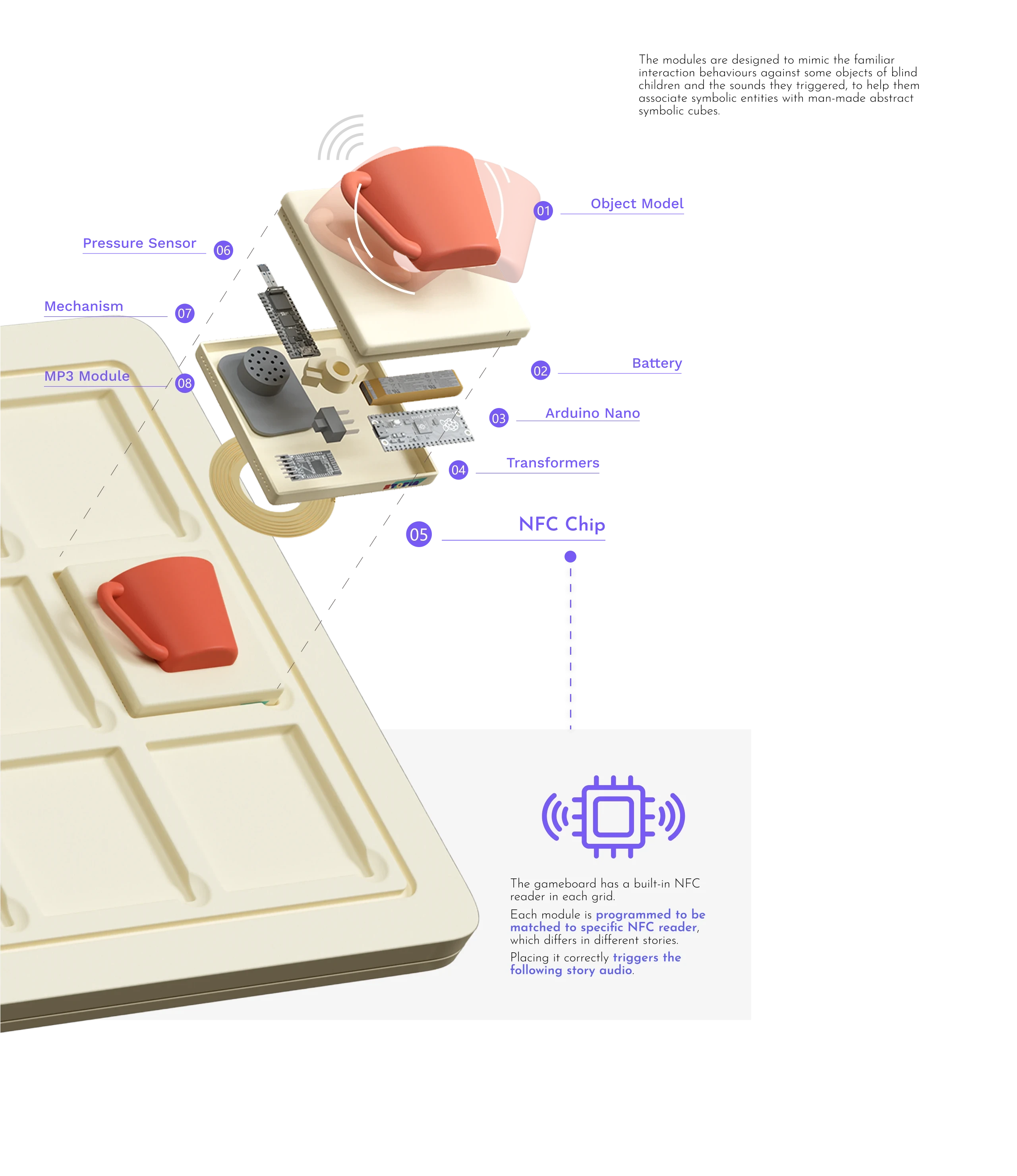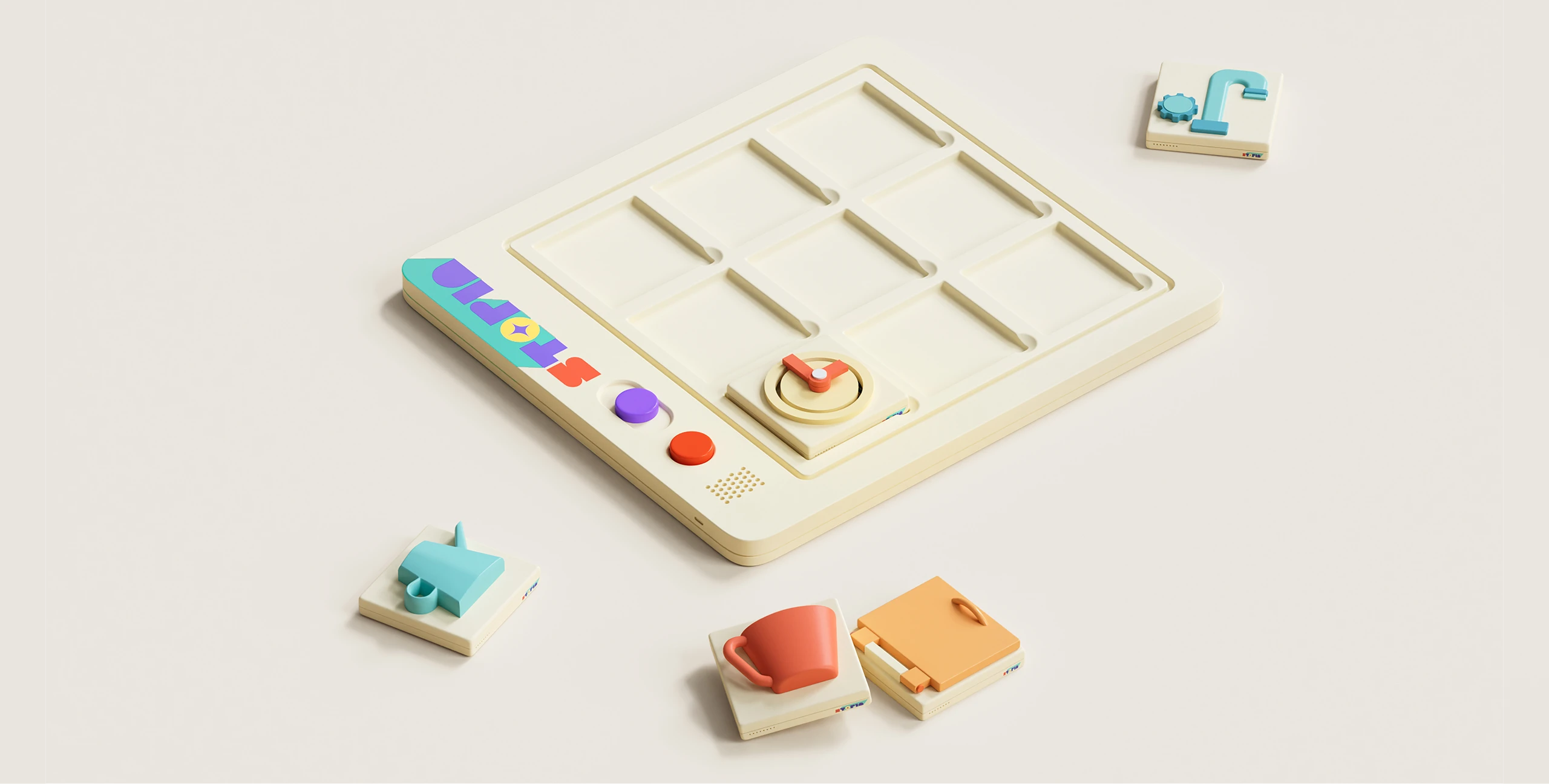
Through spelling puzzles according to stories, the abilities of self-centred & allocentric reference frame of blind children can get improved. Otherwise, it also uses online community as a medium to facilitate children’s expression of space and creativity.
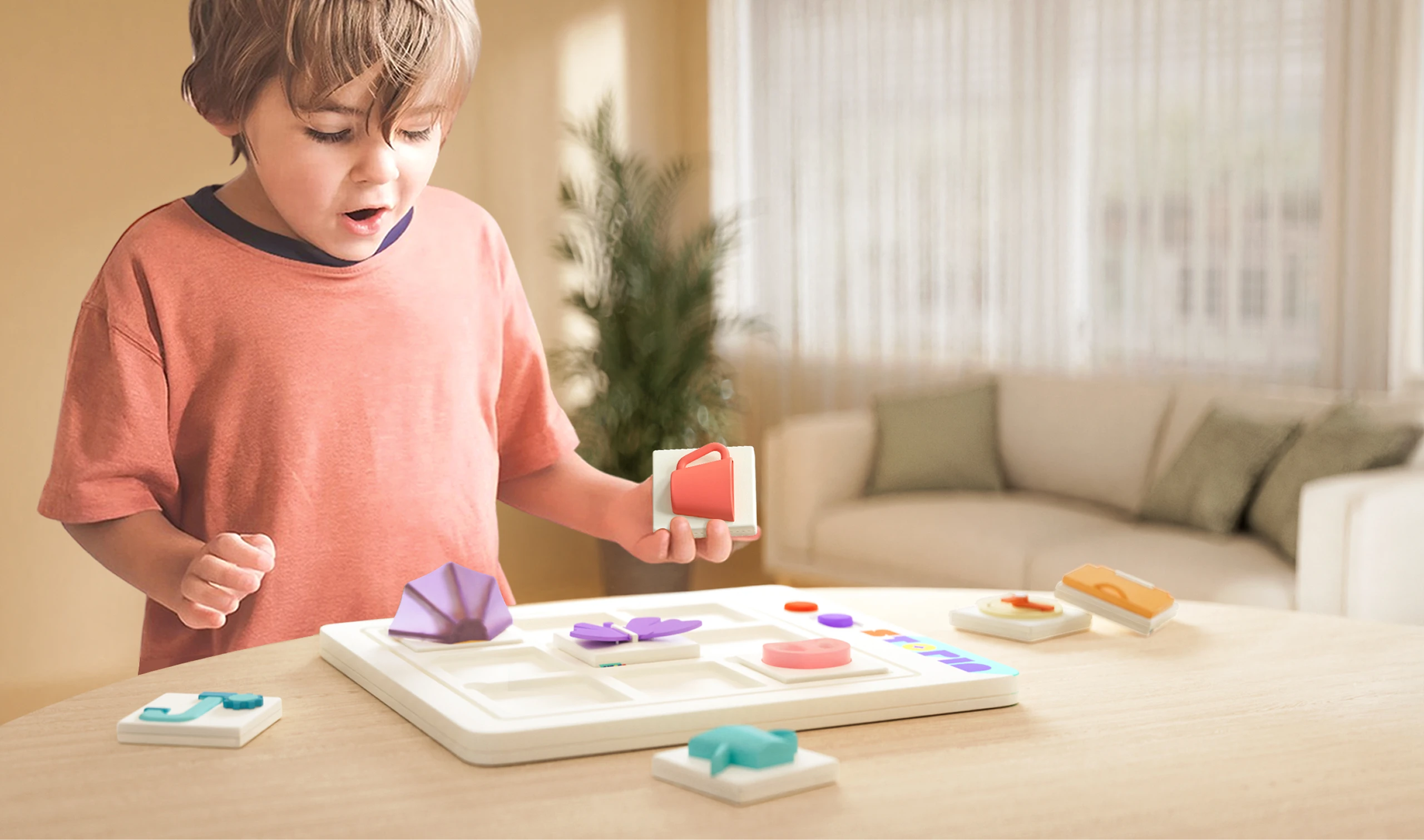
Our human brain uses Self-Centered or Allocentric Frame of Reference to gain different perspectives on the environment, building spatial awareness by constant switching.
- Self-Centred Frame of Reference: As the name suggests, it sets oneself as the centre of the reference system, with one’s own torso as the vertical axis and the spread of the arms as the horizontal axis.
- Allocentric Frame of Reference: In Mornitoring & Control, the graphic of people's minds can change in real time according to the user's expression.
Since vision and touch provide allocentric and egocentric spatial coordinates respectively, blindness is presumed to hinder the development of allocentric representations, thereby impairing one’s ability to employ effective haptic strategies for problems like mental rotation that rely on such spatial coding.
All in all, through the user research phase, the aim of this project is to design a targeted children's toy for helping visually impaired preschool kids improve their ability to use self-centred and allocentric frames of reference in a safe and entertaining way.
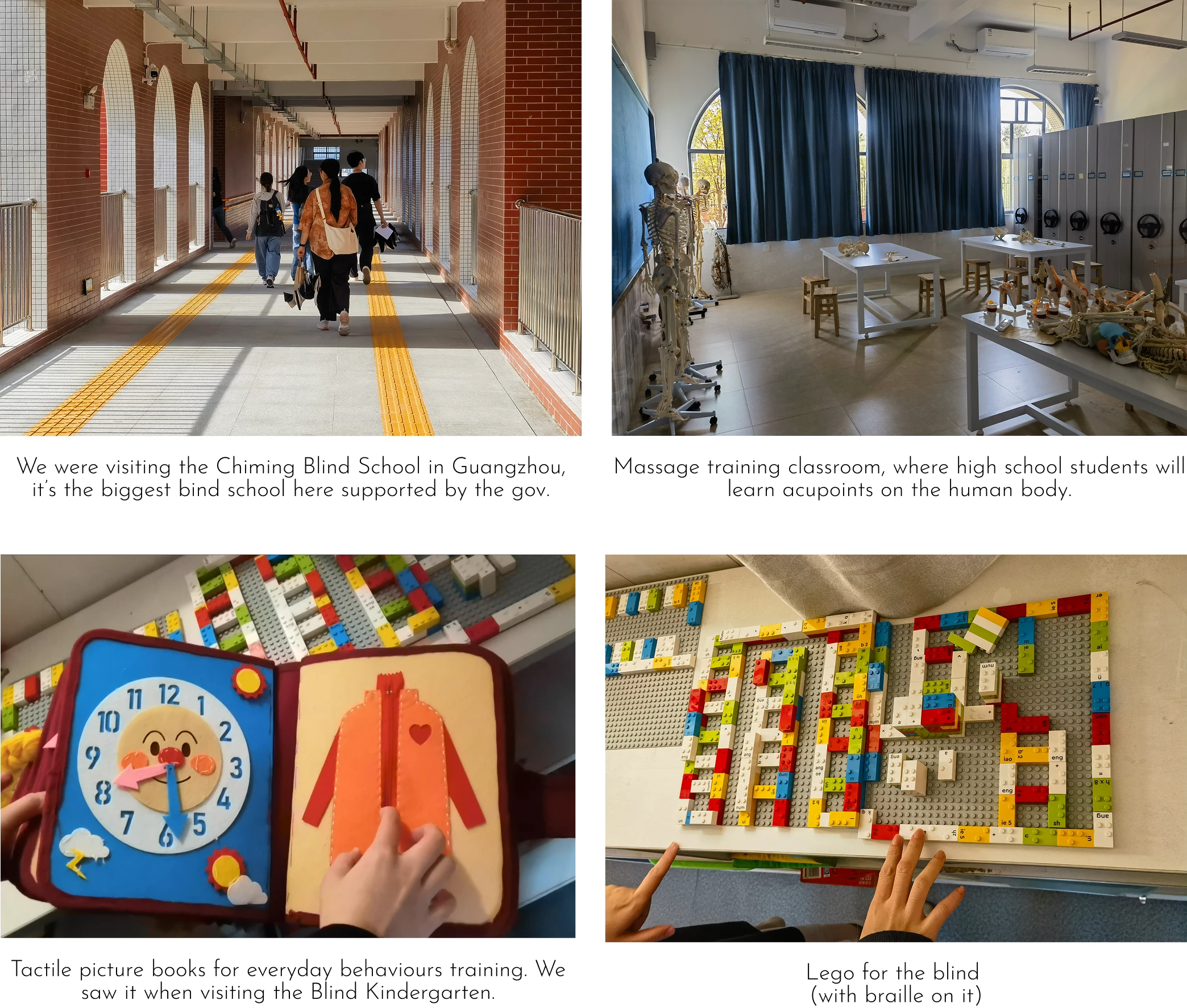
We went to QiMing Kindergarten in Tianhe District, Guangzhou, and conducted a simple test with four students (3 low-vison and 1 total blindness with multiple disabilities) from Class 1. We found that we mistakenly represented a visual pattern with embossing, which is not feasible for blind children with no visual experience. However, we also found a new opportunity of exploring the non-visual sensory cognition pattern.
In order to get a blind child to perform a location restoration task, the first problem is how to let them know what the puzzle piece is in hand, otherwise you won't even be able to give instructions. At present, we made a mistake that we “regard their fingers as eyes”. We are caught up in a kind of "Sighted-Centrism". So what kind of mode does the blind child use to connect symbols with abstract concepts?
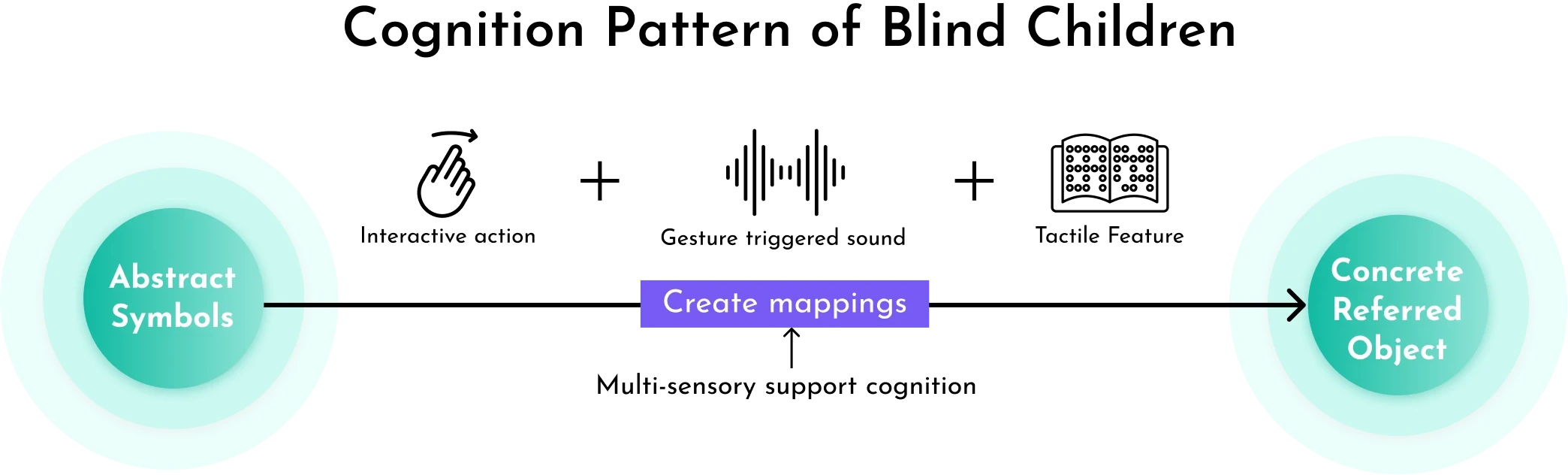
We came to the Kindergarten again to conduct new round of user research and participant observation. With the research result, we summarized the Cognition Pattern of Blind Children:
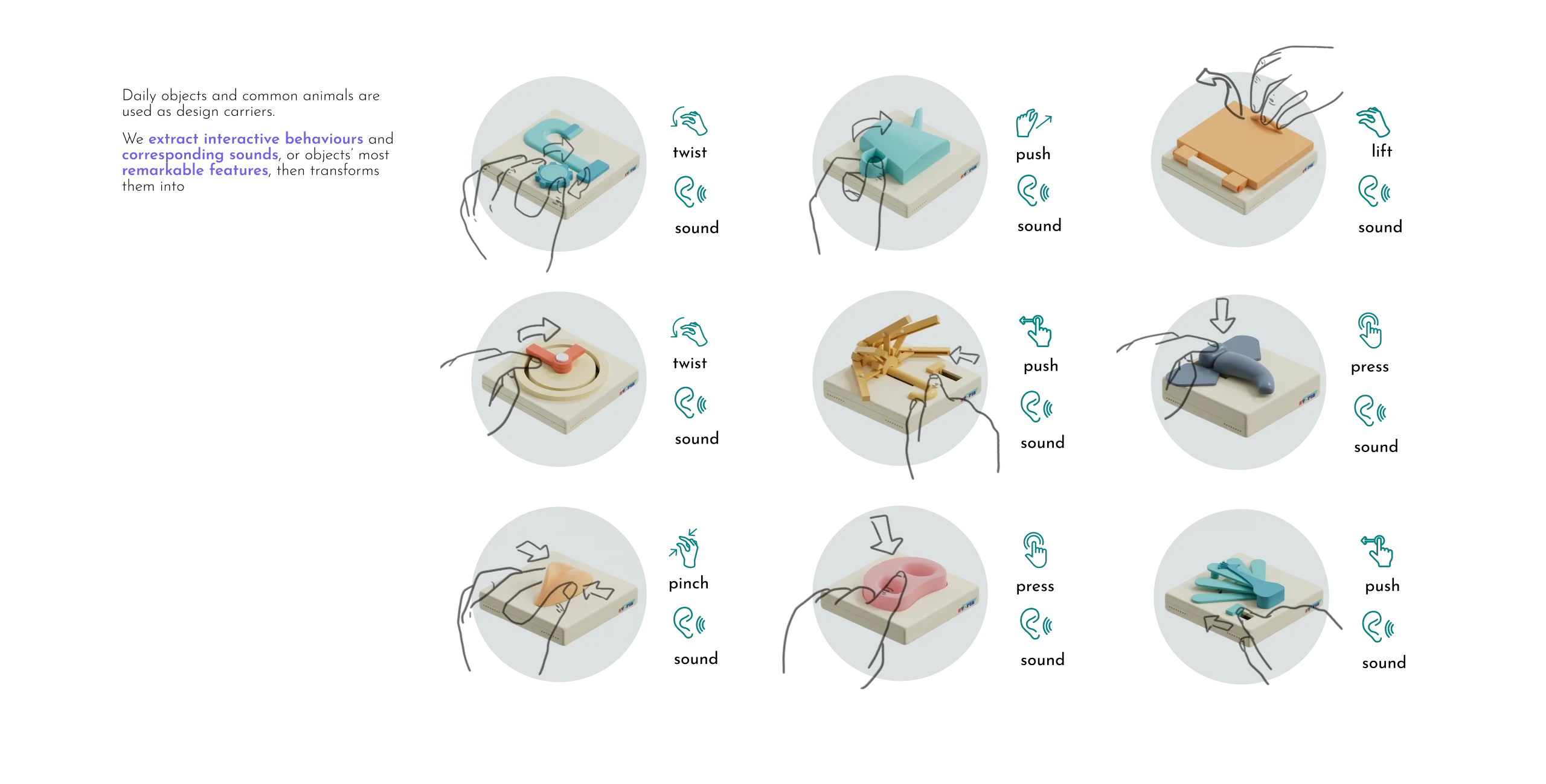
The iconicity concept for them can be defined as a "similarity which is not associated with the object's appearance but to a recognizable important characteristic of it". The cognitive model of blind children presents a multi-sensory superposition pattern to increase accuracy. There is great potential for calibrating the cognition of blind children in a multimodal format.
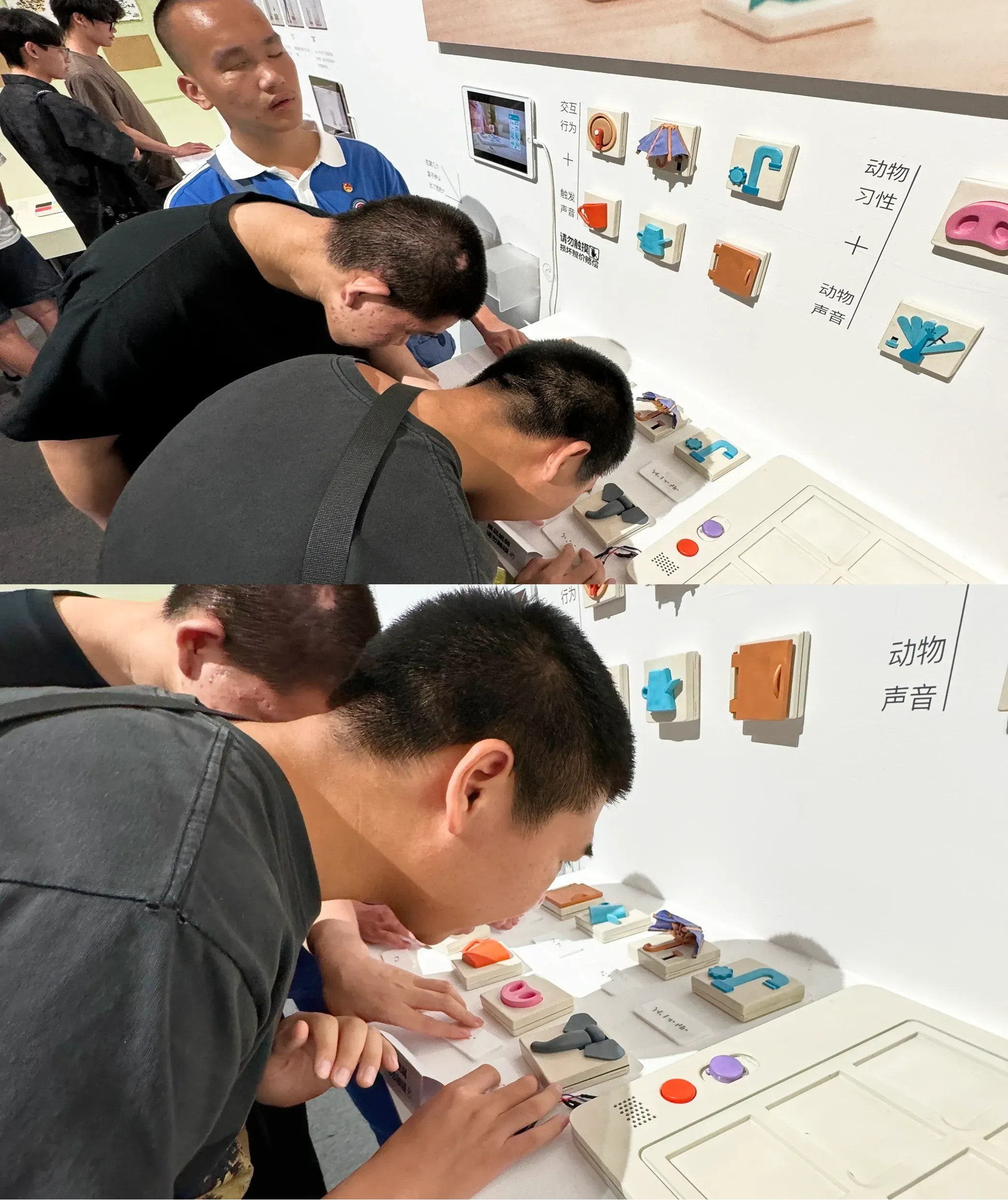
Although, unfortunately, the four preschool students who participated in our test were unable to come to the exhibition due to safety issues, we invited three of our junior high friends and one teacher who assisted us for the tests attending the Qi’ming School for the blind, to have a try of our product.
They thought it was great fun, and successfully put the cubes on the right grid according to the story audio.