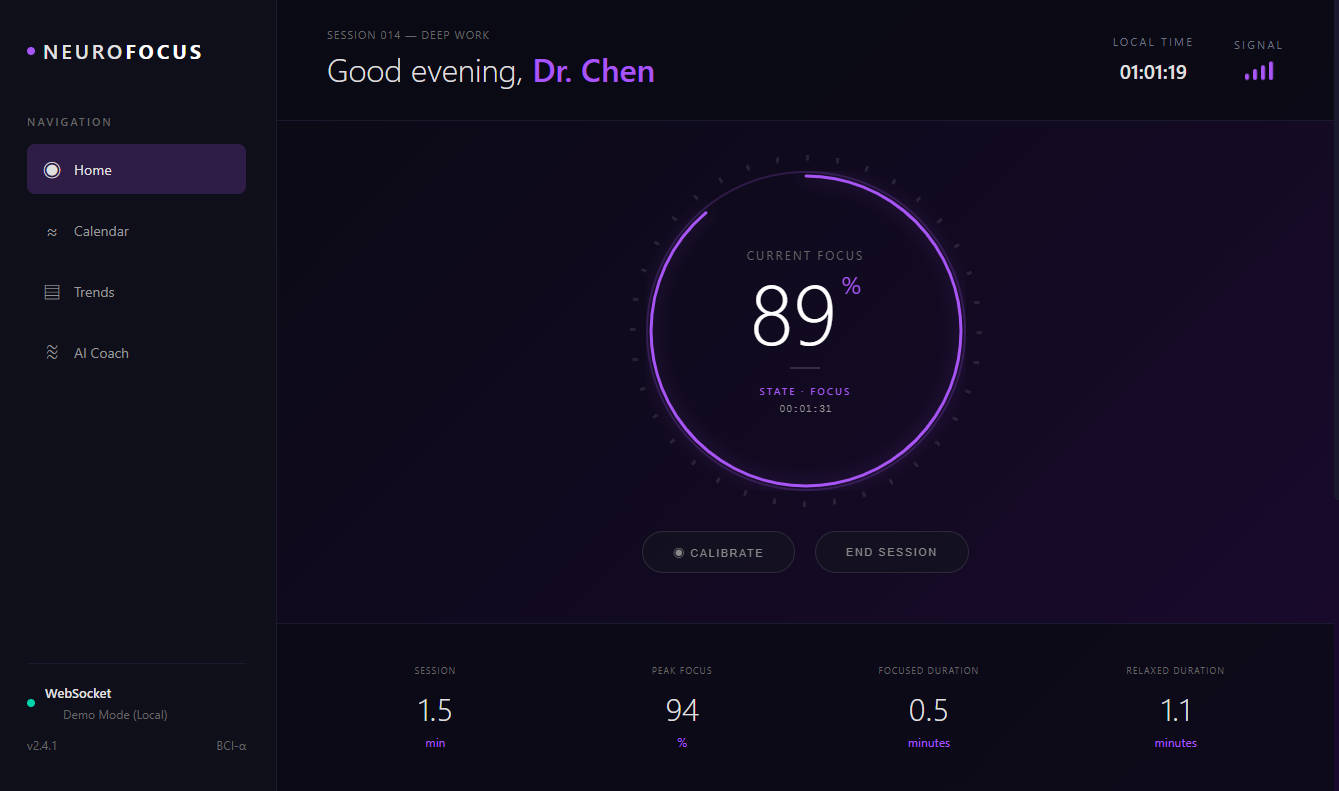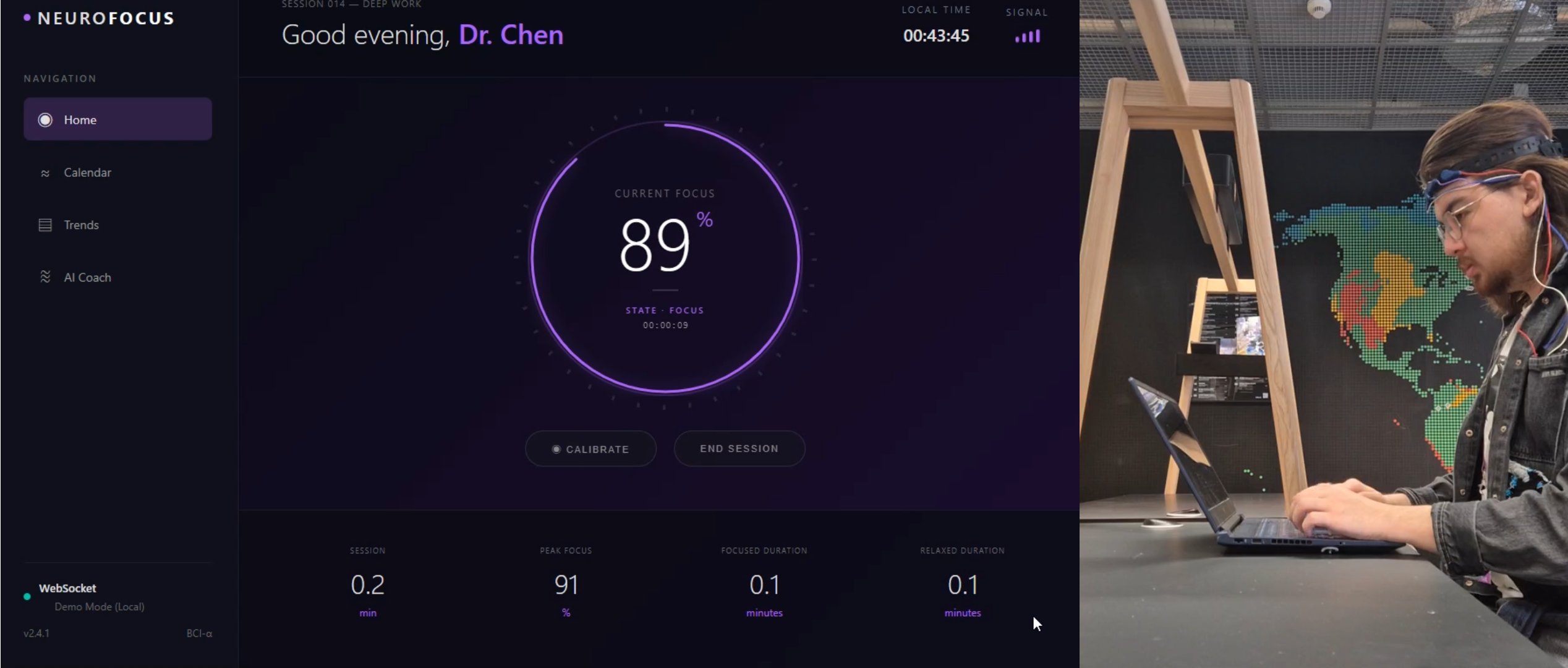
The user of this platform will monitor their own neural fluctuations continuously, acting as both the observer and the subject of their mental activity, which is a metaphor for reclaiming cognitive autonomy in an age of digital distraction.
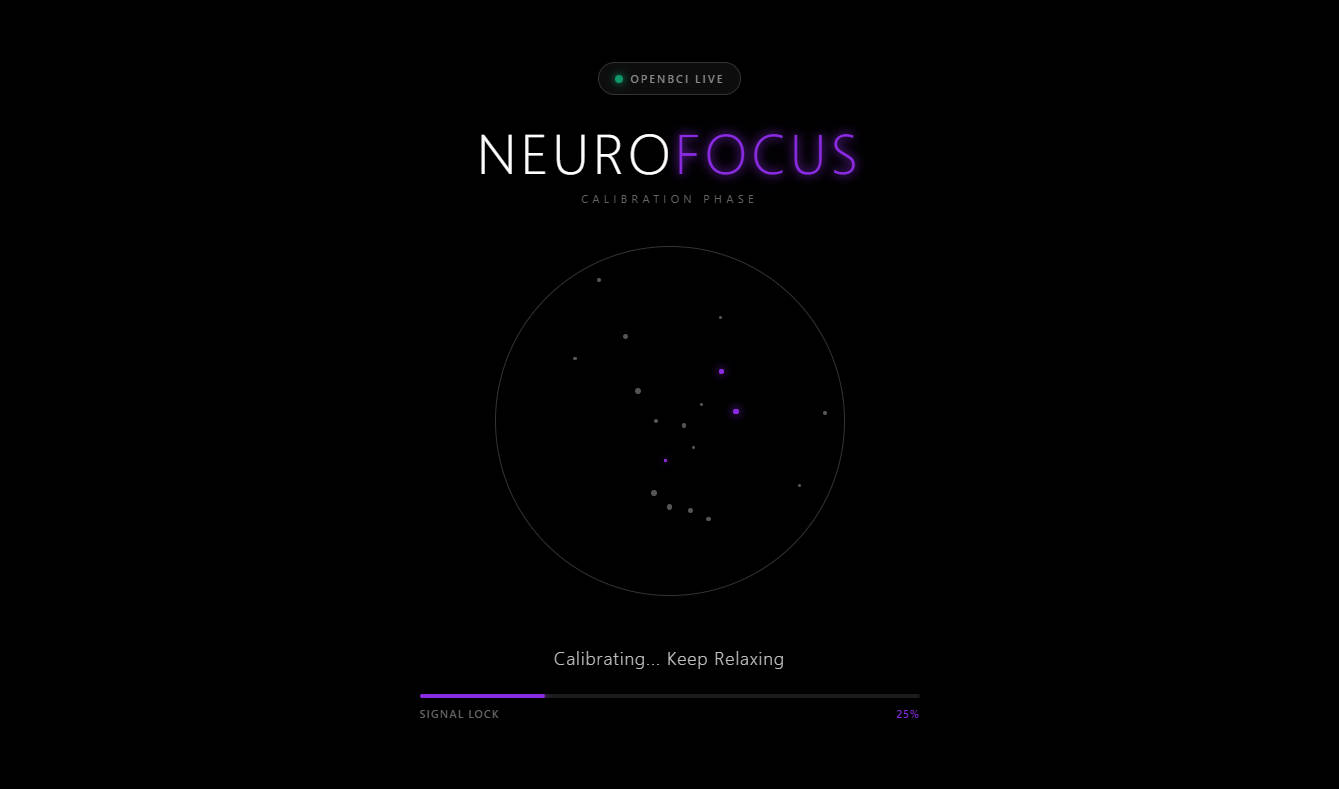
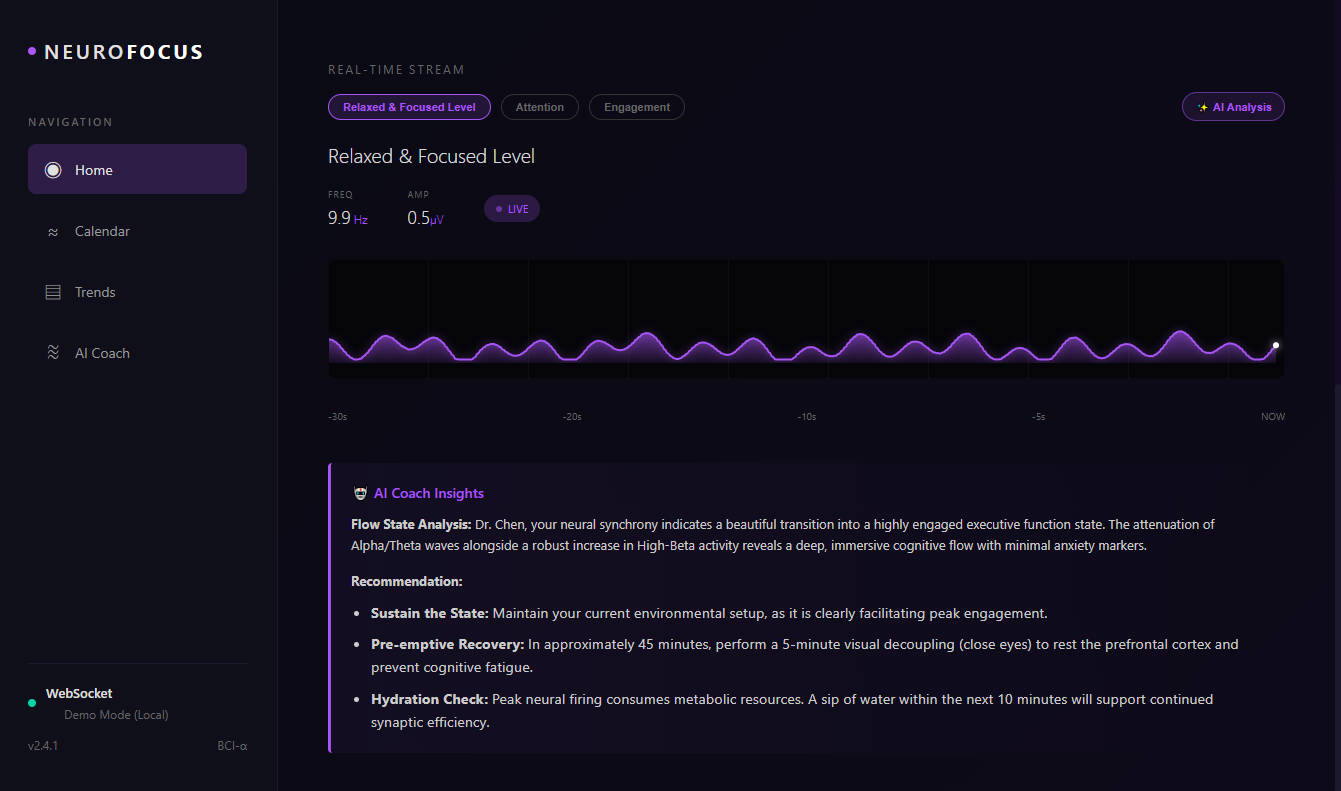
This project investigates how continuous cognitive overload destabilizes our attention by masking the early signs of mental burnout. By analyzing real-time brainwaves, it reveals the hidden patterns of human engagement. The experience begins with a "phygital" calibration transitioning visual particles from chaos to order. Through this, we try to discuss the necessity of mental transparency, and how we can use real-time biological data to sustain our flow state and resist cognitive exhaustion.
Looking forward, the concept expands into a system-level ecosystem integration to bridge the gap between digital interfaces and physical environments. By introducing iOS and Android Focus Widgets, it serves as a glanceable "Neural Battery" on the home screen, allowing users to comprehend their cognitive state without opening the app. Furthermore, through Smart Home and IoT sync, the physical space adapts to the mind—automatically dimming lights or silencing notifications the moment the BCI detects a "Deep Work" state. Ultimately, NeuralFocus is more than a dashboard; it's a cognitive companion. We're not just measuring focus; we're helping humanity find its Flow.